
Benefits of Using Aluminium Piping for Compressed Air
Why more Indian factories are replacing GI and black steel pipe with aluminium for their compressed-air network — and what it actually changes on the shop floor.
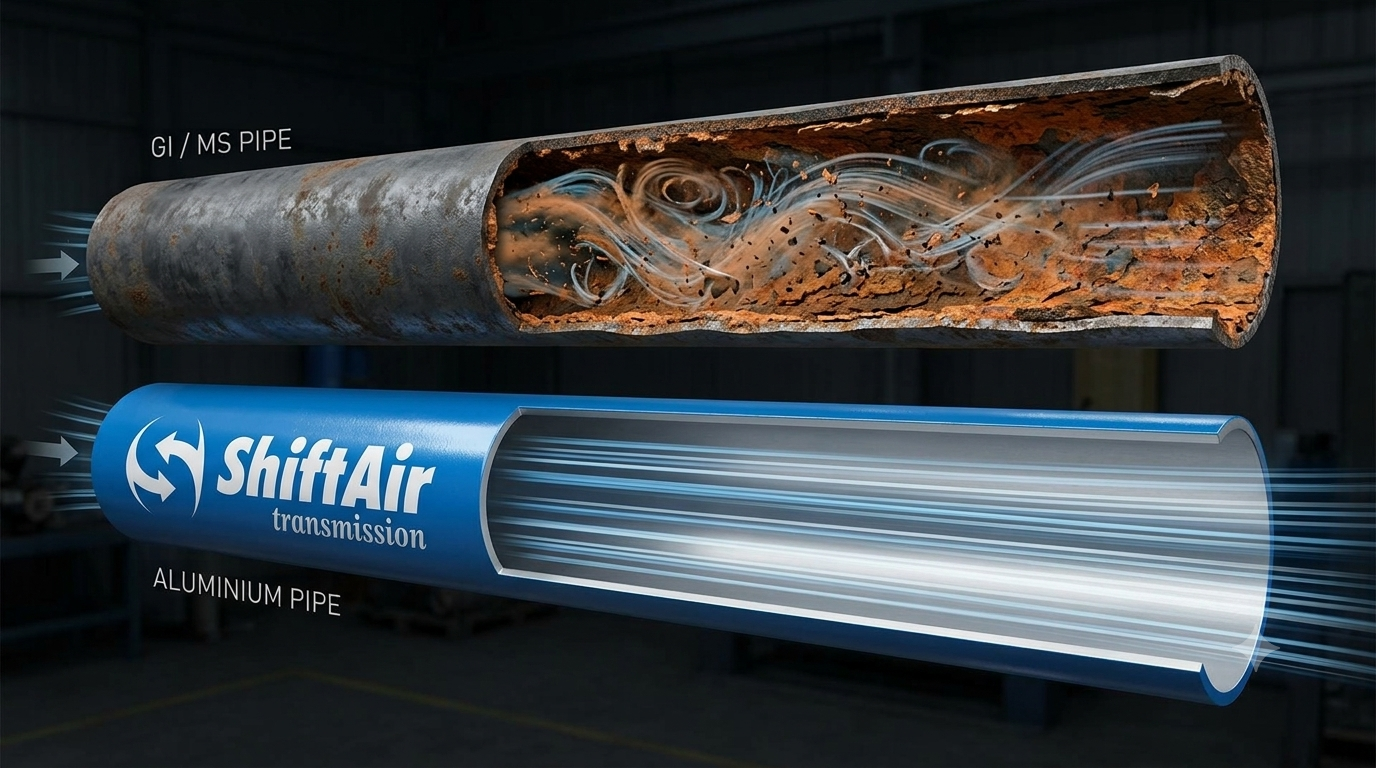
For decades, galvanised iron (GI) pipe was the default choice for compressed-air distribution in Indian factories, simply because it was familiar and cheap to buy. But once a plant adds up the real cost of a GI network — threading labour, internal corrosion, leaks at every joint, and the energy lost to pressure drop over years of service — the total picture looks very different. That's why aluminium piping has become the preferred choice for new and retrofitted compressed-air systems across manufacturing, automotive, pharma and food-grade plants. Here's what actually changes when a plant switches.
1. A smooth bore that never corrodes internally
Aluminium does not rust. Unlike GI or mild-steel pipe, which forms internal scale and rust flakes within a few years of carrying moist compressed air, an aluminium pipe's bore stays smooth for the life of the installation. That matters in two ways: air quality stays clean at the point of use, protecting tools, valves and downstream instrumentation from rust particles, and the pipe's flow characteristics don't degrade over time the way corroding steel pipe does.
2. Lower pressure drop, lower energy cost
A smooth, non-corroding bore means less friction resistance to airflow. Aluminium piping typically delivers noticeably lower pressure drop across a network than an equivalent GI installation, especially as the system ages. Since every extra bar of pressure drop a compressor has to overcome adds roughly 6–8% to energy consumption, a low-friction pipe material translates directly into a lower electricity bill over the life of the system — not just a cleaner-looking pipe run.
GI pipe's internal friction loss gets worse every year as scale builds up. Aluminium's friction loss stays essentially constant from day one to year twenty, so the energy-saving gap between the two materials widens the longer the system runs.
3. Push-fit, modular installation — no hot works
GI pipe needs cutting, threading and often welding on site, which means hot-work permits, skilled labour and joints that are permanent once made. Aluminium compressed-air piping systems use push-fit or quick-connect fittings that snap together without threading, welding or specialised tools. A ring main that would take a crew several days to thread and install in GI can typically be assembled in a fraction of the time, with far less skilled labour and no fire-watch requirements on a live production floor.
4. A modular network that can grow with the plant
Because aluminium fittings are mechanical, not permanent, the network can be reconfigured, extended or relocated without cutting into existing pipe or shutting the whole system down. Adding a new machine, moving a drop line, or extending the ring main to a new bay is a bolt-on job rather than a re-piping project — a real advantage for plants that expand or reorganise their floor layout every few years.
5. Fewer leaks over the system's life
Most compressed-air leaks occur at joints — and GI pipe has far more of them, since every length needs a threaded connection at both ends. Aluminium systems typically use fewer, more reliable mechanical joints with O-ring seals that don't loosen or corrode the way threaded steel joints do over time. Since leaks are one of the largest hidden costs in any compressed-air system, a network with inherently fewer and more reliable joints stays tighter for longer, without the recurring leak-taping and re-threading that GI networks need.
6. Lighter, easier to handle and mount
Aluminium pipe weighs a fraction of steel pipe of the same bore, which reduces the load on overhead supports and brackets and makes it far easier for a small crew to handle lengths safely at height — a meaningful safety and cost benefit on any ceiling-mounted ring main.
7. Better long-term value, not just lower purchase price
Aluminium pipe usually costs more per metre than GI pipe at the point of purchase. But once installation labour, corrosion-driven maintenance, leak repairs and the compounding energy cost of pressure drop are accounted for, aluminium systems generally come out ahead on total cost of ownership over a 10–15 year horizon — which is why most engineering-led compressed-air system designs now specify it as standard for new ring mains.
Is aluminium right for every application?
Aluminium piping suits the vast majority of industrial compressed-air distribution — ring mains, drop lines, machine connections and plant-wide networks up to typical industrial working pressures. For very high-pressure or specialised process-gas applications, a plant's engineers should confirm pressure ratings and compatibility against the specific duty before specifying any pipe material, aluminium included.
Thinking about switching your ring main to aluminium?
Share your current pipe layout and plant demand — ITT India's engineers will help you size and plan the switch.